
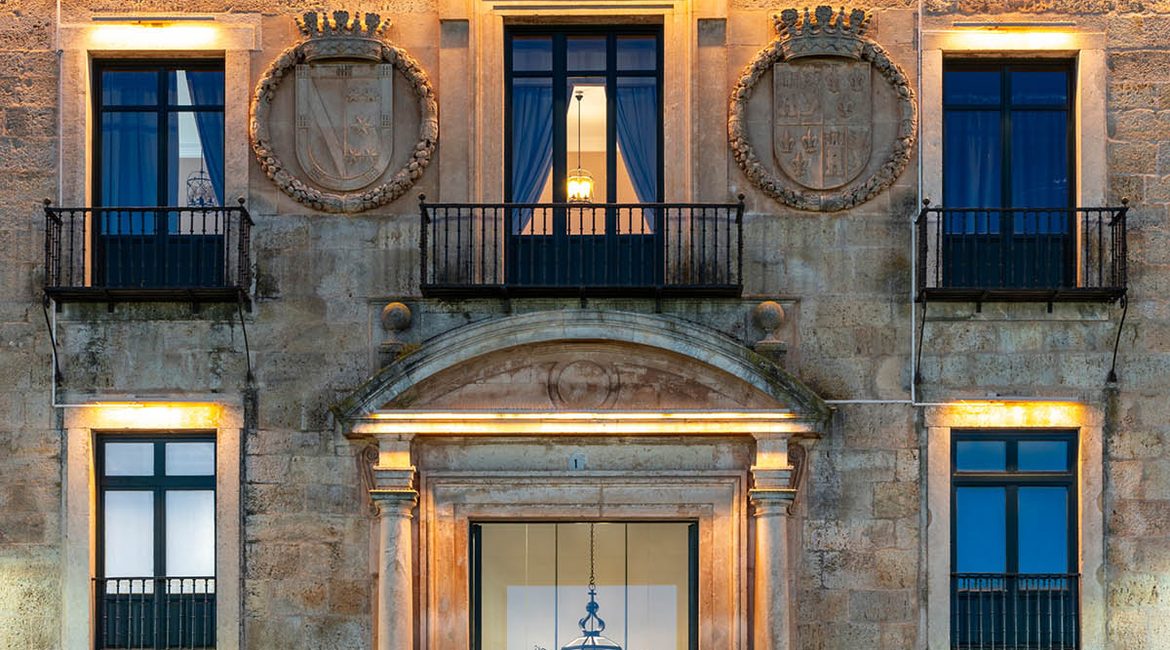
Project: Parador de Lerma

Location: Lerma, Burgos. Spain.
Date: 2026
Elements: Rooms and common areas
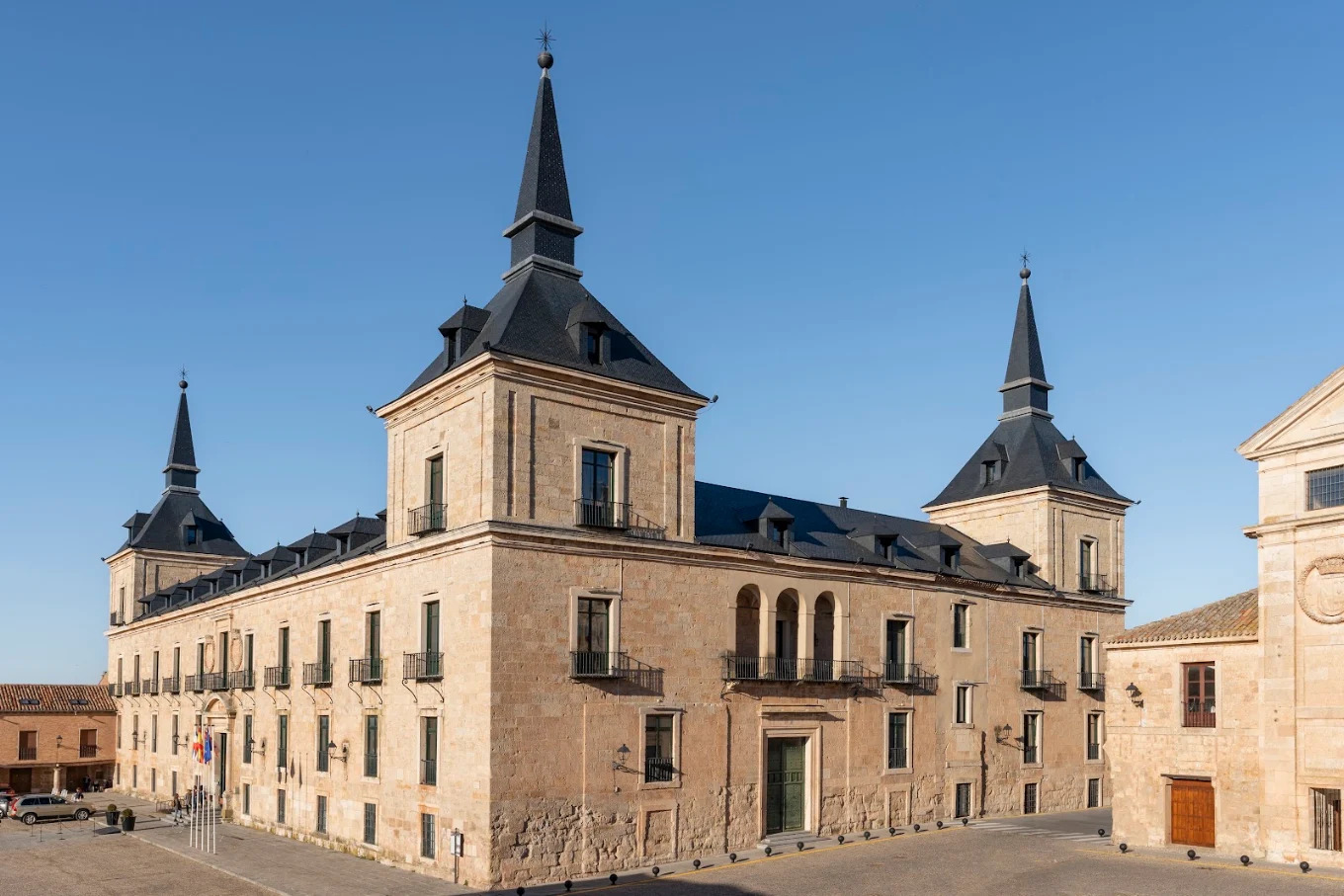
Lerma sits on a hill overlooking the Arlanza valley. Its present appearance is the work of one man: Don Francisco Gómez de Sandoval y Rojas, Duke of Lerma and favourite of Philip III. In the early 17th century he transformed the old medieval town into a grand monumental complex, one of the most important of Spain’s late Habsburg era.
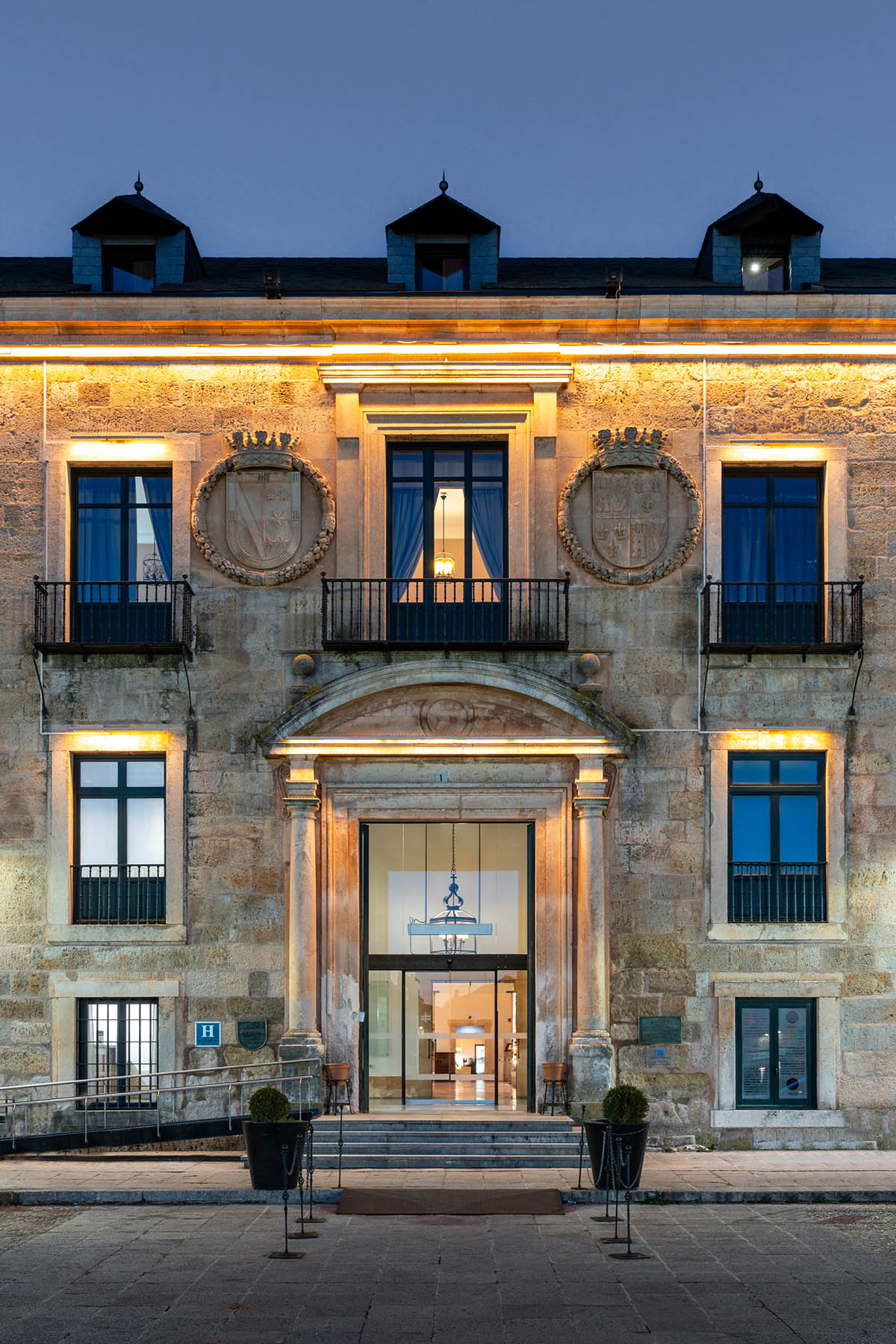
The heart of that transformation is the Ducal Palace, whose construction began in 1601 on the site of an old medieval castle. It is a Herrerian-style building, sober and elegant, that presides over the Plaza Ducal. The palace was built as a symbol of the duke’s power and hosted the festivities of the royal court and, over time, served various uses until becoming, in the 21st century, a Parador de Turismo, a role it still holds today.
Fitting out the restaurants of a 17th-century palace
In Lerma our work focused on restaurant furniture, one of the spaces where furniture quality is most demanding. Heavy guest traffic, contact with food and liquids and the need for constant cleaning must all be considered from the moment materials are chosen right through to assembly.
On this occasion we manufactured POS units, open glassware shelves, sideboards and breakfast counters: the set of pieces a dining-room team works with every day.
Dyed natural veneer to match the existing furniture
The palace already had its own furniture, and the new pieces had to live alongside it without clashing. To achieve this, we used natural wood veneer dyed to match the existing pieces, which were restored or reclaimed. It is delicate work in colour and finish: getting close to the tone is not enough, new and old must look like part of the same ensemble. Natural veneer also retains the grain and warmth of real wood, which is hard to achieve with synthetic materials.
Countertops in a mineral resin surface
The countertops in the restaurant areas were made in a highly resistant mineral resin material (solid surface) that resembles marble and offers a hygienic, durable surface. It is ideal for hospitality, where surfaces face constant use, knocks, moisture and intensive cleaning. Besides being tough, it has no visible joints and allows minor damage to be repaired, so the tops keep their appearance for years. The result has been very satisfactory.
Restoring existing furniture: a more sustainable choice
Paradores decided to restore some of the existing pieces. Reusing furniture rather than replacing it avoids creating unnecessary waste, and it fits both the respect for the building’s history and a hospitality industry increasingly aware of its environmental impact.
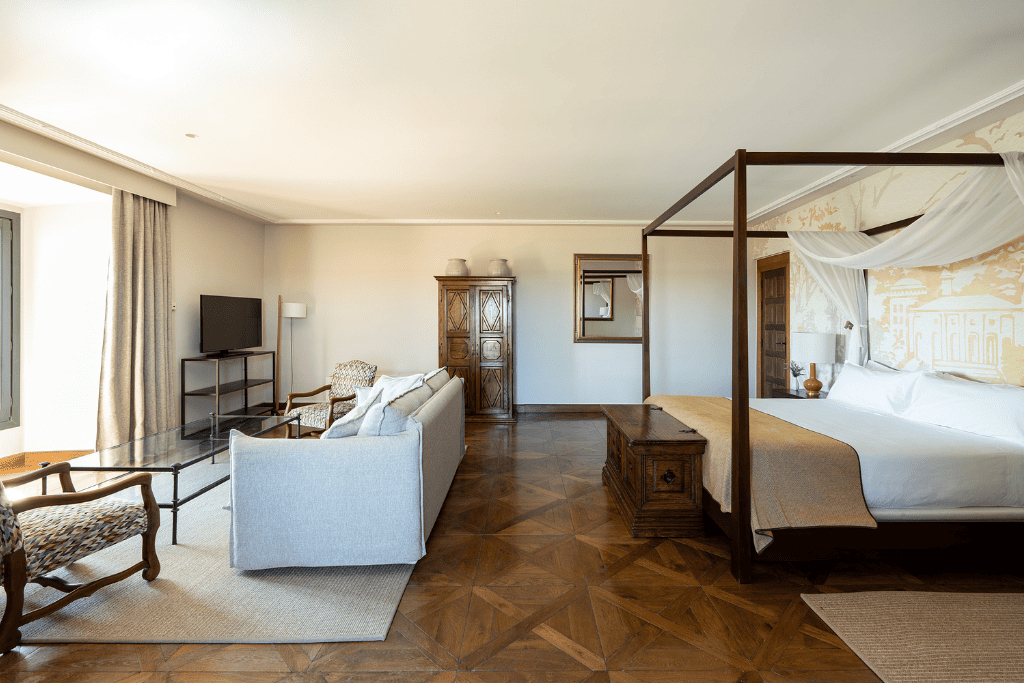
In the guest rooms: desks and headboard pieces
The guest rooms were also part of the commission. We made the desks and the pieces that accompany the headboard, using the same materials and finishes as the rest of the project so that rooms and dining areas share a common language.
A palace with history, furniture with judgement
Working in a building like the Ducal Palace calls for balance between the new and the inherited. Combining natural materials, tones coordinated with what already existed and high-performance technical surfaces allowed us to deliver furniture that withstands the heavy demands of a restaurant without breaking the harmony of the whole.
Lerma joins other Paradores we have worked on, including Jarandilla de la Vera, Cardona, Santillana Gil Blas and Altamira, as well as Sigüenza.
Your next hospitality project, made to measure
Are you thinking of refurbishing a hotel, a restaurant or a heritage building? At Bagon Muebles we manufacture custom furniture for landmark projects, with carefully selected materials and a finish cared for down to the last detail. Tell us your idea and we’ll look at it together.
Photography: Paradores